
 336h 25m
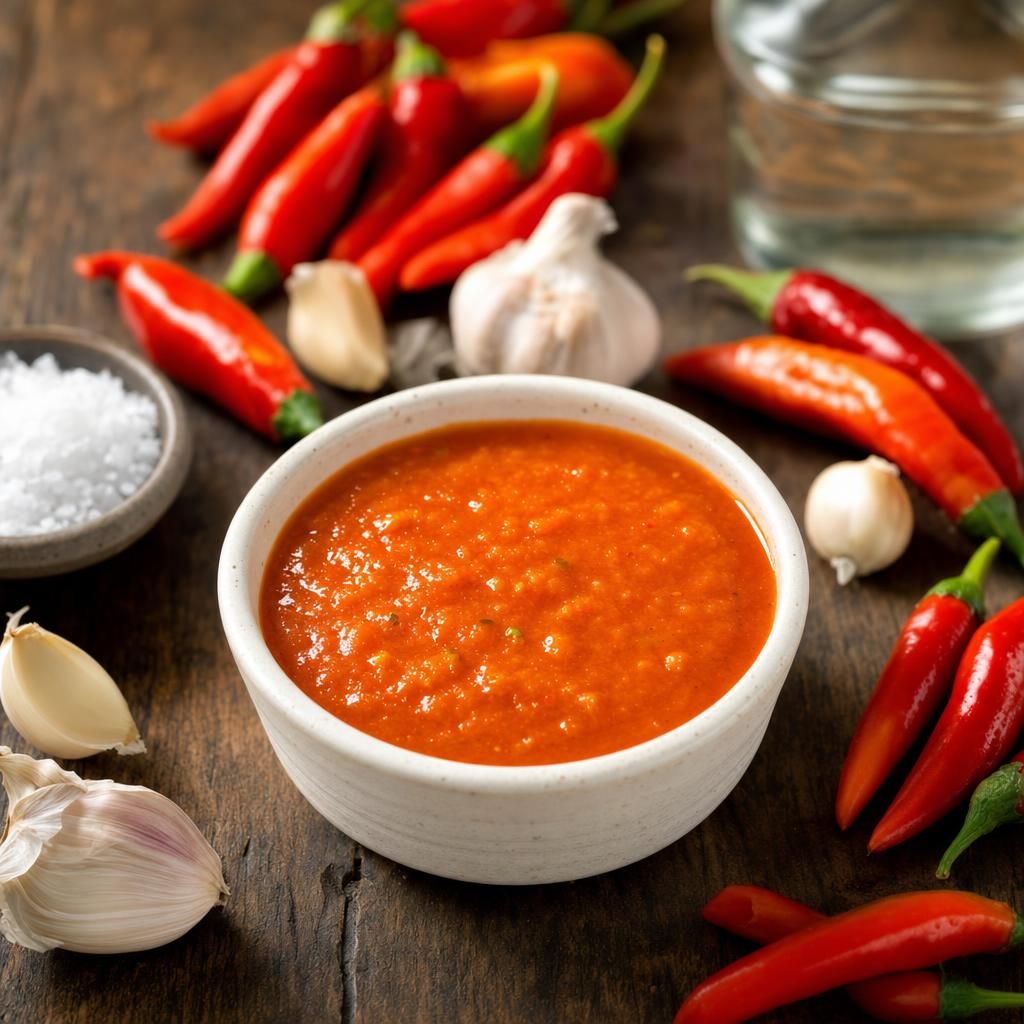
Fermented Garlic Tabasco Pepper Sauce
Fresh Tabasco peppers and garlic ferment into a bright, savory hot sauce with lively heat. White vinegar adds a clean finish and keeps the blended sauce pourable.
Shopping options
Cook this recipe
- fresh Tabasco peppers-300 g
- Garlic cloves-30 grams
- Filtered water-200 milliliters
- White vinegar, 5% acidity-120 milliliters
- Kosher salt-15.9 grams
Wash the jar, lid, weight, bottles, and utensils thoroughly with hot, soapy water; rinse well. Wearing gloves, rinse the peppers, remove their stems, and chop them coarsely. Peel and thinly slice the garlic. Measure 300 grams of prepared peppers and 30 grams of prepared garlic.
Wear gloves when handling the peppers, avoid touching your eyes, and wash your hands and tools afterward.
Measure the salt carefully. The produce weighs 330 grams, so its salt allowance is 3% of the combined prepared pepper and garlic weight: 9.9 grams. Add another 6 grams of salt for the 200 grams of water, giving 15.9 grams total salt and maintaining the same 3% ratio throughout the mixture.
Dissolve all the salt in the water. Pack the peppers and garlic into the jar, pour in the brine, and press gently to release trapped air. Fit the fermentation weight so all produce stays beneath the brine. Leave at least 2 inches of headspace above the liquid.
Keep all peppers and garlic fully submerged beneath the brine and leave the specified headspace.
Set the jar in a small bowl to catch any overflow. Attach the lid loosely enough for gas to escape; do not seal it tightly. Ferment out of direct sunlight at 65–75°F (18–24°C).
Keep the lid loose enough for gas to escape; never seal the fermenting jar tightly.
Check daily, release trapped gas away from your face, and keep all peppers and garlic submerged. Use the calibrated food pH meter on a representative mashed sample: check for pH 5.2 or lower within 24 hours and below 4.6 within 48 hours. Discard without tasting if either target is missed; added vinegar cannot rescue a failed ferment. Discard tested samples and continue monitoring acidity.
Do not wait until day 7 to begin acidity measurements.
Once the early acidity checks have passed, begin checking flavor-development readiness after 7 days; fermentation typically takes 7–14 days. Look for slowed bubbling and a pleasantly tangy aroma. Confirm the representative mashed sample remains below pH 4.6 before proceeding. Do not return the sample to the jar. Discard any spoiled batch.
The later readiness check does not replace the first-24-hour and first-48-hour acidity checks.
Strain the fermented mixture, reserving the brine. Transfer the peppers and garlic to the blender. Add 60 milliliters (1/4 cup) of the reserved brine and all 120 milliliters (1/2 cup) of white vinegar. Discard the remaining brine.
Blend for 1–2 minutes until very smooth and pourable. Let any foam settle, then check that the finished sauce also measures pH 4.6 or below.
Open the blender away from your face to avoid irritating pepper vapors.
Confirm that the finished sauce measures pH 4.6 or below before refrigerating it.
Transfer to the clean bottles, cap, label with the date, and refrigerate immediately. Let the sauce rest in the refrigerator for 24 hours for a more rounded flavor. Shake before serving in 1-teaspoon portions alongside tacos, beans, roasted vegetables, and other dishes.
Refrigerate the sauce at 40°F (4°C) or below and discard it if mold, an unpleasant odor, or unexpected pressure develops.
How did it turn out?
Rating and review tools are unavailable right now.