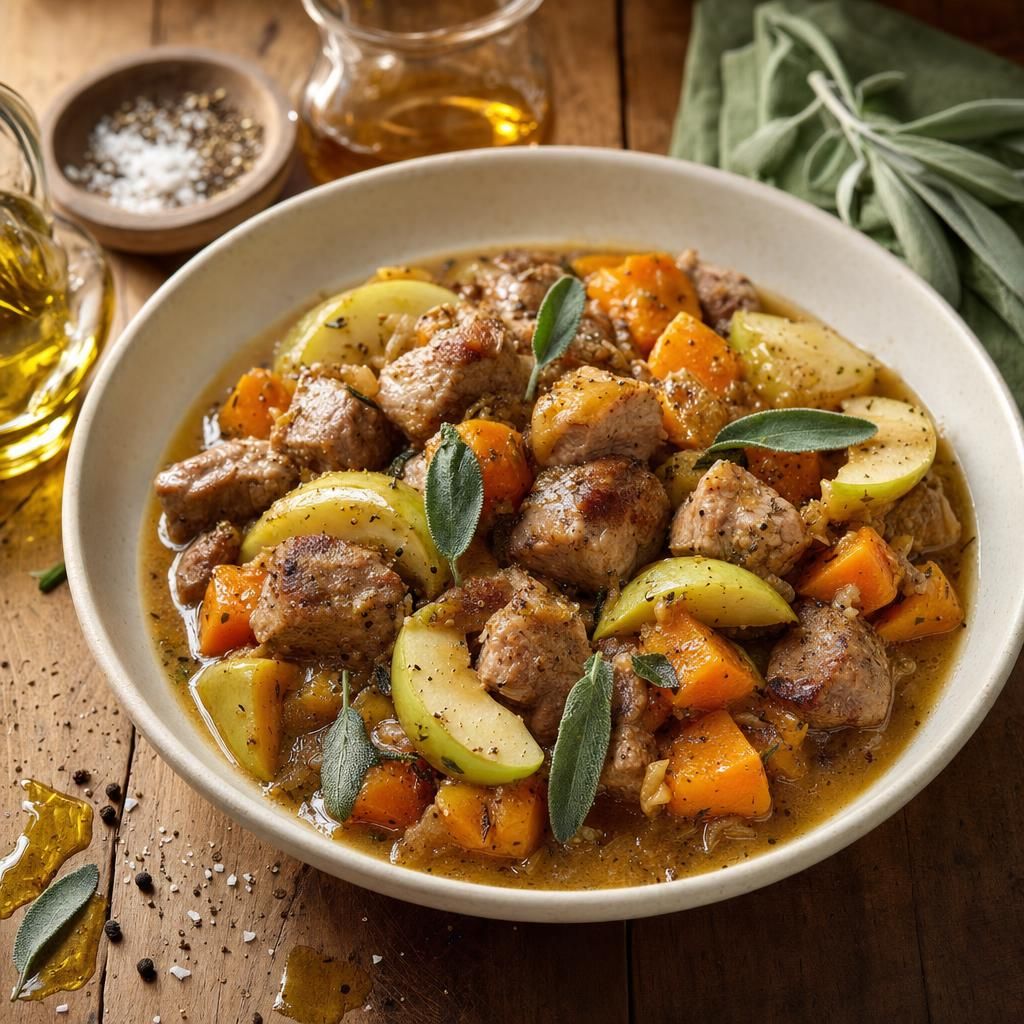
Cider Pork and Squash Stew
Servings: 6 · Prep: 30 min · Cook: 150 min · Total: 200 min
Ingredients
- 2 1/2 pounds Boneless pork shoulder
- 1 1/2 pounds Butternut squash
- 2 Granny Smith apples
- 1 cup Unsweetened nonalcoholic apple cider
- 1 Yellow onion
- 1 tablespoon Fresh sage
- 3 cups Low-sodium chicken broth
- 3 tablespoons Olive oil
- 2 tablespoons All-purpose flour
- 1 1/2 teaspoons Fine sea salt
- 1/2 teaspoon Ground black pepper
- 1 tablespoon Apple cider vinegar
Equipment
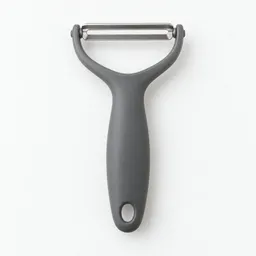
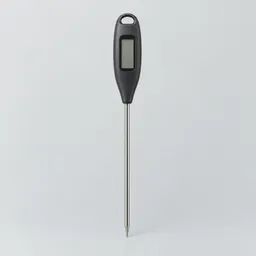
Measuring Cups; Measuring Spoons; Knife; Cutting Board; Tongs; Dutch oven; Plate; Spoon; Vegetable peeler; Instant-read food thermometer; produce brush; measuring cups; measuring spoons; knife; cutting board; tongs; dutch oven; plate; spoon; vegetable peeler; instant-read food thermometer
Steps
- Prepare the produce. Wash your hands and clean the work surface. Rinse the produce under running water, scrub the squash rind before peeling, and dry everything. Remove any damaged areas. Peel and chop the onion, cut the prepared squash into 1 1/2-inch chunks, and finely chop the sage. Leave the apples whole until needed.
- 1 1/2 pounds butternut squash — peeled and seeded
- 2 apple
- 1 onion
- 1 tablespoon sage — finely chopped
- Trim and season the pork. Trim thick surface fat from the pork, leaving the internal marbling, and cut the meat into 1 1/2-inch chunks. Pat dry and season with 1 teaspoon salt and the pepper. Wash your hands and clean the knife, board and surfaces after handling the raw pork.
- 2 1/2 pounds pork shoulder
- 1 teaspoon salt
- 1/2 teaspoon Ground Black Pepper
Keep raw pork and its juices separate from produce; wash hands and contact surfaces after handling.
- Brown the pork in batches. Heat 2 tablespoons olive oil in the Dutch oven over medium-high heat. Brown the pork in three batches, keeping the pieces in a single layer with space between them. Allow about 5–7 minutes per batch, turning to brown two sides well; the meat will not be cooked through. Transfer each batch to the plate. Lower the heat if the browned residue starts to darken excessively.
- 2 1/2 pounds pork shoulder
- 2 tablespoons olive oil
Treat the browned pork as undercooked; keep it and its plate separate from ready-to-eat food.
- Soften the onion and add flour. Reduce the heat to medium. Add the remaining 1 tablespoon oil, the onion and the remaining 1/2 teaspoon salt. Cook for 6–8 minutes, stirring frequently, until softened. Stir in the flour and cook for 1 minute.
- 1 onion
- 1 tablespoon olive oil
- 2 tablespoons flour
- 1/2 teaspoon salt
- Deglaze and build the gravy. Pour in the cider gradually, stirring and scraping up the browned residue from the bottom. Simmer for 2 minutes. Stir in the broth and sage, then return the pork and its accumulated juices to the pot. The liquid should come most of the way up the meat.
- 1 cup apple cider
- 1 tablespoon sage — finely chopped
- 3 cups chicken broth
- Simmer the pork until nearly tender. Bring just to a simmer, then reduce the heat to low and cover. Cook at a gentle simmer for 1 1/2–2 1/2 hours, stirring occasionally, until the pork is nearly fork-tender but still offers slight resistance. Avoid a rolling boil, which can toughen the meat and reduce the liquid too quickly.
- Skim the fat and add squash. Skim excess fat from the surface. Add the squash and gently settle it into the gravy. Cover and simmer for 15 minutes.
- 1 1/2 pounds butternut squash — peeled and seeded
- Add the apples and finish simmering. Meanwhile, peel and core the apples and cut them into thick, approximately 1 1/2-inch chunks. Gently fold them into the stew. Cover and simmer for another 10–15 minutes, until the squash is tender, the apples still hold their shape, and the pork yields easily to a fork.
- 2 apple
- Check the pork and thicken the gravy. Check a large pork piece with a clean thermometer; pork must reach at least 145°F and remain at that temperature for at least 3 minutes, although shoulder will cook well beyond this point before becoming tender. If the gravy needs thickening, simmer uncovered for about 5 minutes, gently shaking the pot rather than stirring vigorously. The finished gravy should lightly coat a spoon.
Use a clean thermometer; verify the pork reaches at least 145°F and stays there for 3 minutes.
- Finish with vinegar and serve. Stir in the apple cider vinegar gently, skim any remaining excess fat, and serve hot, dividing the pork, squash, apples and gravy evenly among six bowls.
- 1 tablespoon apple cider vinegar
Notes
Pork shoulder varies in tenderness. Use the fork test rather than the clock to decide when to add the squash; adding it while the pork is still firm can leave the vegetables overcooked.
For a make-ahead dinner, cook through the pork-only simmer, then cool promptly and refrigerate. The next day, lift off the solidified fat, bring the pork and gravy back to a gentle simmer, and continue with the squash and apples.
Freeze the finished stew for up to 2–3 months for best quality. The squash and apples will soften somewhat after thawing.
Cooking safety
Keep raw pork and its juices separate from the prepared produce. Do not rinse raw pork, and wash utensils that touched it before using them for finished food.
If holding the stew before serving, keep it at 140°F or above.
Refrigerate leftovers in shallow, covered containers within 2 hours of cooking, or within 1 hour when the surrounding temperature exceeds 90°F. Store at 40°F or below for 3–4 days, and reheat leftovers to 165°F.
https://plumtally.com/recipes/cider-pork-and-squash-stew-r7rihd8ilugz