
Butternut Sage Risotto

Servings: 4 · Prep: 15 min · Cook: 40 min · Total: 55 min

Ingredients

  • 1 pound Butternut squash
  • 1 1/2 cups Arborio rice
  • 1 medium Yellow onion
  • 1 tablespoon Fresh sage
  • 1/2 cup Mascarpone cheese
  • 6 cups Low-sodium vegetable broth
  • 2 tablespoons Olive oil
  • 1/2 teaspoon Fine salt
  • 1/4 teaspoon Ground black pepper
  • 1 tablespoon Lemon juice

Equipment

Saucepan; Measuring Cups; Measuring Spoons; Cutting Board; Chef’s knife; Spoon; Ladle; Vegetable peeler; produce brush; wooden spoon or silicone spatula; saucepan; measuring cups; measuring spoons; cutting board; chef’s knife; spoon; ladle; vegetable peeler

Steps

  1. Prepare the vegetables and sage. Wash your hands and clean the preparation surface. Scrub the squash under running water before peeling; rinse the onion and sage, then dry them. Remove any damaged areas. Peel and seed the squash, measure 1 pound of flesh, and cut it into even 1/4-inch cubes. Peel and finely dice the onion. Finely chop enough sage to measure 1 tablespoon.
    • 1 pound butternut squash — peeled and seeded
    • 1 medium (1 Count) onion
    • 1 tablespoon sage — finely chopped

    Wash produce under running water; do not use soap.

  2. Warm the broth. Pour the vegetable broth into the medium saucepan and bring it just to a simmer over medium heat. Reduce the heat to low and keep it warm without letting it boil rapidly.
    • 6 cups vegetable broth
  3. Soften the onion. Heat the olive oil in the wide saucepan over medium heat. Add the onion, salt, and pepper. Cook for 5–6 minutes, stirring occasionally, until the onion is soft and translucent but not browned.
    • 2 tablespoons olive oil
    • 1 medium (1 Count) onion
    • 1/2 teaspoon salt
    • 1/4 teaspoon Ground Black Pepper
  4. Partially cook the squash. Add the squash and 1/2 cup of warm broth. Cover and cook over medium-low heat for 6–8 minutes, stirring once halfway through, until the squash begins to soften around the edges but is still firm in the center. Uncover; if liquid remains pooled in the pan, simmer for another 1–2 minutes.
    • 1 pound butternut squash — peeled and seeded
    • 1/2 cup vegetable broth

    Lift the lid away from you to avoid steam burns.

  5. Add the rice and sage. Stir in the rice and chopped sage. Cook for 1–2 minutes, stirring gently to coat the grains in the oil and vegetables.
    • 1 1/2 cups rice
    • 1 tablespoon sage — finely chopped
  6. Add broth gradually. Begin adding the 5 cups of broth allocated for cooking the rice, about 1/2 cup at a time. Maintain a gentle simmer over medium-low heat. Stir thoroughly after each addition, then every 30–60 seconds, scraping across the bottom to prevent sticking. Constant stirring is unnecessary. Add the next ladleful when the previous addition is mostly absorbed and a spoon drawn through the rice leaves a brief trail; do not let the pan become dry.
    • 5 cups vegetable broth

    Add the warm broth carefully to avoid splashing.

  7. Check the rice and squash. Start tasting the rice after 18 minutes of gradual broth additions. It will usually take 20–25 minutes to become tender with a slight bite at the center, without a hard, chalky crunch. The squash should be fully tender and easily crushed against the side of the pan. Continue adding broth and cooking until both are ready; you may not need all 5 cups. If the rice needs longer, use some of the broth reserved for finishing.

    Let a spoonful cool before tasting.

  8. Finish with mascarpone. Remove the pan from the heat. Fold in the mascarpone and lemon juice until smooth. Add the remaining finishing broth a little at a time, using only enough to make the risotto loose and creamy. It should flow slowly from the spoon and spread gently in a shallow bowl rather than hold a stiff mound.
    • 1/2 cup mascarpone cheese
    • 1 tablespoon lemon juice
    • 1/2 cup vegetable broth

    Use clean hands and utensils when handling the mascarpone.

  9. Divide and serve. Serve immediately, dividing the risotto evenly among four bowls. It will thicken as it stands.

Notes

Do not rinse the arborio rice; its surface starch helps create the creamy texture.

Broth absorption varies with the rice and the width of the pan. Use the doneness cues rather than forcing in every drop of broth.

Choose mascarpone labeled suitable for vegetarians or confirmed to contain no animal-derived rennet.

Risotto is best freshly cooked. When reheating, loosen it with a small splash of vegetable broth as needed; the rice will be softer than when first served.

Cooking safety

Wash produce with running water, not soap, and use clean hands and utensils when handling the mascarpone.

Refrigerate leftovers in shallow, covered containers within 2 hours of cooking, within 1 hour if the room temperature is above 90°F. Keep refrigerated at 40°F or below and use within 3–4 days.

Reheat leftovers thoroughly to 165°F, stirring to eliminate cold spots.

https://plumtally.com/recipes/butternut-sage-risotto-rpe9fydp5sdz
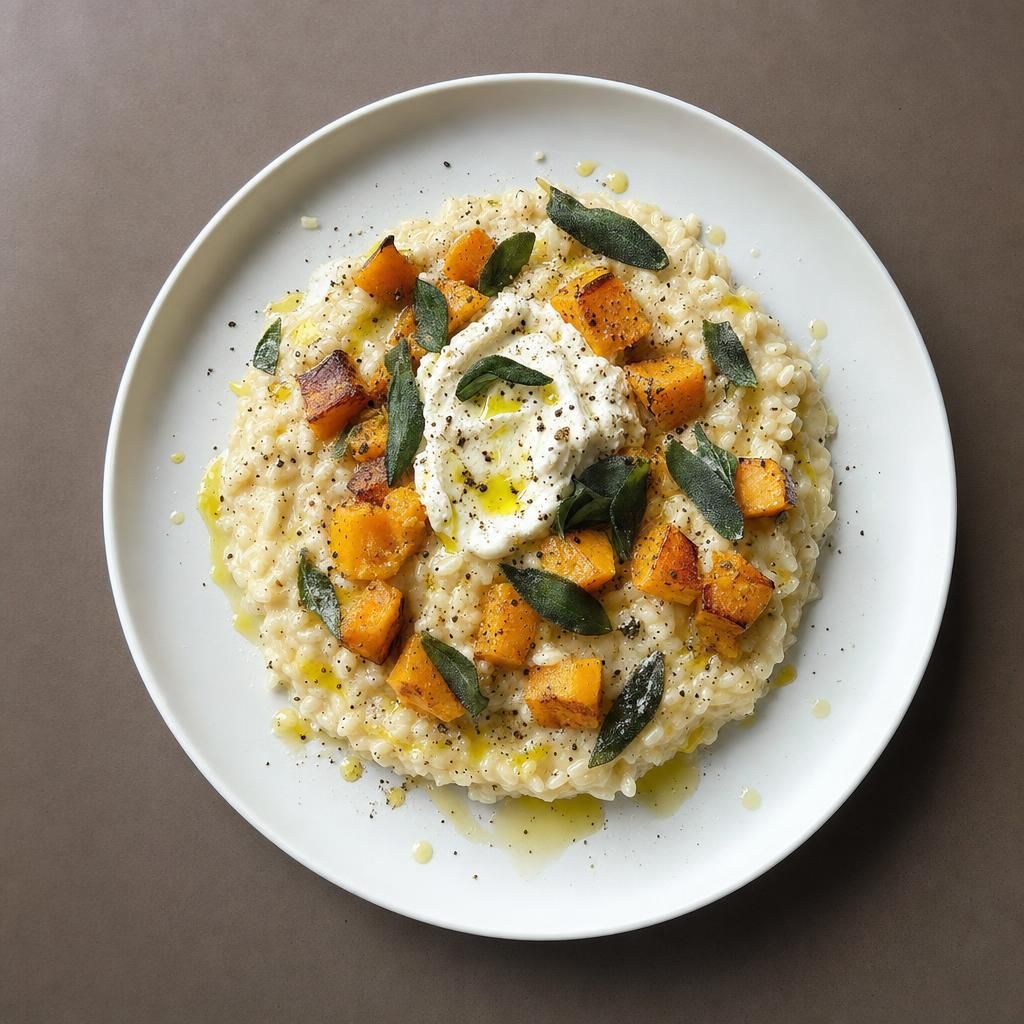
Butternut Sage Risotto

Butternut Sage Risotto

Creamy arborio rice with tender butternut squash, fragrant sage, and a rich mascarpone finish. This savory autumn risotto cooks gently on the stovetop with frequent, rather than constant, stirring.

Kroger

$11.42

Per Serving

$2.86

Prep

15 min

Cook

40 min

Difficulty

medium

Ingredients and shopping

Servings

$41.14

9 to buy · 1 you have

28% used in this recipe$29.72 unused

Steps

Centered stainless-steel saucepan with a long handle on a neutral light-gray studio background.Saucepan
Centered nested set of four clear measuring cups with handles on a neutral light background.Measuring Cups
Centered studio photograph of a set of stainless steel measuring spoons on a pale neutral background.Measuring Spoons
Centered rectangular wooden cutting board photographed against a plain light background.Cutting Board
A centered chef’s knife with a broad stainless-steel blade and dark handle photographed on a light neutral background.Chef’s knife
Centered stainless-steel spoon photographed against a neutral light-gray background.Spoon
Centered stainless-steel ladle photographed against a neutral light background with soft studio lighting.Ladle
Centered studio photograph of a single vegetable peeler on a neutral light background.Vegetable peeler
A single unbranded produce brush with a light handle and dense bristles, centered on a neutral light background.produce brush
Centered wooden kitchen spoon on a light neutral background.wooden spoon or silicone spatula
1

Prepare the vegetables and sage

Centered studio photograph of a set of stainless steel measuring spoons on a pale neutral background.Measuring Spoons
Centered rectangular wooden cutting board photographed against a plain light background.Cutting Board
A centered chef’s knife with a broad stainless-steel blade and dark handle photographed on a light neutral background.Chef’s knife
Centered stainless-steel spoon photographed against a neutral light-gray background.Spoon
Centered studio photograph of a single vegetable peeler on a neutral light background.Vegetable peeler
A single unbranded produce brush with a light handle and dense bristles, centered on a neutral light background.produce brush

Wash your hands and clean the preparation surface. Scrub the squash under running water before peeling; rinse the onion and sage, then dry them. Remove any damaged areas. Peel and seed the squash, measure 1 pound of flesh, and cut it into even 1/4-inch cubes. Peel and finely dice the onion. Finely chop enough sage to measure 1 tablespoon.

Wash produce under running water; do not use soap.

2

Warm the broth

Centered stainless-steel saucepan with a long handle on a neutral light-gray studio background.Saucepan
Centered nested set of four clear measuring cups with handles on a neutral light background.Measuring Cups

Pour the vegetable broth into the medium saucepan and bring it just to a simmer over medium heat. Reduce the heat to low and keep it warm without letting it boil rapidly.

3

Soften the onion

Centered stainless-steel saucepan with a long handle on a neutral light-gray studio background.Saucepan
Centered studio photograph of a set of stainless steel measuring spoons on a pale neutral background.Measuring Spoons
Centered wooden kitchen spoon on a light neutral background.wooden spoon or silicone spatula

Heat the olive oil in the wide saucepan over medium heat. Add the onion, salt, and pepper. Cook for 5–6 minutes, stirring occasionally, until the onion is soft and translucent but not browned.

4

Partially cook the squash

Centered stainless-steel saucepan with a long handle on a neutral light-gray studio background.Saucepan
Centered nested set of four clear measuring cups with handles on a neutral light background.Measuring Cups
Centered wooden kitchen spoon on a light neutral background.wooden spoon or silicone spatula

Add the squash and 1/2 cup of warm broth. Cover and cook over medium-low heat for 6–8 minutes, stirring once halfway through, until the squash begins to soften around the edges but is still firm in the center. Uncover; if liquid remains pooled in the pan, simmer for another 1–2 minutes.

Lift the lid away from you to avoid steam burns.

5

Add the rice and sage

Centered stainless-steel saucepan with a long handle on a neutral light-gray studio background.Saucepan
Centered nested set of four clear measuring cups with handles on a neutral light background.Measuring Cups
Centered wooden kitchen spoon on a light neutral background.wooden spoon or silicone spatula

Stir in the rice and chopped sage. Cook for 1–2 minutes, stirring gently to coat the grains in the oil and vegetables.

6

Add broth gradually

Centered stainless-steel saucepan with a long handle on a neutral light-gray studio background.Saucepan
Centered stainless-steel ladle photographed against a neutral light background with soft studio lighting.Ladle
Centered wooden kitchen spoon on a light neutral background.wooden spoon or silicone spatula

Begin adding the 5 cups of broth allocated for cooking the rice, about 1/2 cup at a time. Maintain a gentle simmer over medium-low heat. Stir thoroughly after each addition, then every 30–60 seconds, scraping across the bottom to prevent sticking. Constant stirring is unnecessary. Add the next ladleful when the previous addition is mostly absorbed and a spoon drawn through the rice leaves a brief trail; do not let the pan become dry.

Add the warm broth carefully to avoid splashing.

7

Check the rice and squash

Centered stainless-steel saucepan with a long handle on a neutral light-gray studio background.Saucepan
Centered stainless-steel ladle photographed against a neutral light background with soft studio lighting.Ladle
Centered wooden kitchen spoon on a light neutral background.wooden spoon or silicone spatula

Start tasting the rice after 18 minutes of gradual broth additions. It will usually take 20–25 minutes to become tender with a slight bite at the center, without a hard, chalky crunch. The squash should be fully tender and easily crushed against the side of the pan. Continue adding broth and cooking until both are ready; you may not need all 5 cups. If the rice needs longer, use some of the broth reserved for finishing.

Let a spoonful cool before tasting.

8

Finish with mascarpone

Centered stainless-steel saucepan with a long handle on a neutral light-gray studio background.Saucepan
Centered stainless-steel ladle photographed against a neutral light background with soft studio lighting.Ladle
Centered wooden kitchen spoon on a light neutral background.wooden spoon or silicone spatula

Remove the pan from the heat. Fold in the mascarpone and lemon juice until smooth. Add the remaining finishing broth a little at a time, using only enough to make the risotto loose and creamy. It should flow slowly from the spoon and spread gently in a shallow bowl rather than hold a stiff mound.

Use clean hands and utensils when handling the mascarpone.

9

Divide and serve

Serve immediately, dividing the risotto evenly among four bowls. It will thicken as it stands.

10

How did it turn out?

Rating and review tools are unavailable right now.

Make a bundle with Butternut Sage Risotto

Add meals that share its groceries.