Portuguese-Inspired Bifana Sandwiches

Servings: 4 · Prep: 30 min · Cook: 45 min · Total: 75 min

Ingredients

  • 1 1/2 pounds Boneless pork loin
  • 1 cup Dry white wine
  • 5 Garlic cloves
  • 1 1/2 teaspoons Sweet paprika
  • 1 Dried bay leaf
  • 1/4 cup + 1 tablespoon Olive oil
  • 2 tablespoons Unsalted butter
  • 4 Crusty sandwich rolls
  • 1/4 cup Yellow mustard
  • 2 pounds Russet potatoes
  • about 2 2/3 cups (1 pound) Tomatoes
  • 1 Cucumber
  • 2 tablespoons White wine vinegar
  • 2 teaspoons Table salt
  • 3/4 teaspoon Ground black pepper
  • 1 Square foot (1 sq_ft) aluminum foil

Equipment

Oven; Measuring Cups; Measuring Spoons; Cutting Board; Chef’s knife; Mixing bowls; produce brush; Metal turner; Thin-tip instant-read thermometer; 12-inch deep skillet; 18-by-13-inch rimmed baking sheet; Clean platter; Clean tongs; Covered nonreactive marinating dish; oven; measuring cups; measuring spoons; cutting board; chef’s knife; mixing bowls; metal turner; thin-tip instant-read thermometer

Steps

  1. Slice and marinate the pork. Wash your hands with soap and water. Slice the pork across the grain into pieces approximately 1/4 inch thick. In the marinating dish, combine the wine, garlic, paprika, bay leaf, 3/4 teaspoon salt, and 1/4 teaspoon pepper. Add the pork and turn to coat. Cover and refrigerate for at least 30 minutes while preparing the sides. Wash your hands, knife, cutting board, and work surface thoroughly after handling the raw pork.
    • 1 1/2 pounds pork loin — trimmed
    • 1 cup white wine
    • 5 garlic — minced
    • 1 1/2 teaspoons paprika
    • 1 bay leaf
    • 3/4 teaspoon Table Salt
    • 1/4 teaspoon Ground Black Pepper

    Keep the pork refrigerated while marinating and keep raw pork and its utensils separate from salad ingredients; wash hands and surfaces thoroughly after handling it.

  2. Heat the oven and prepare the produce. Heat the oven to 425°F with a rack in the middle. Scrub the potatoes and cucumber under running water, rinse the tomatoes, and dry all the produce. Cut away any damaged areas. Leave the potato skins on and cut the potatoes lengthwise into wedges approximately 3/4 inch thick at their widest point.
    • 2 pounds russet potato
    • about 2 2/3 cups (1 pound) tomato
    • 1 cucumber
  3. Season and roast the potato wedges. Toss the wedges in a bowl with 2 tablespoons olive oil, 3/4 teaspoon salt, and 1/4 teaspoon pepper. Spread them on the baking sheet in a single layer with a cut side against the metal. Roast for 40–45 minutes, turning after 20 minutes, until well browned and tender when pierced with a knife.
    • 2 pounds russet potato
    • 2 tablespoons olive oil
    • 3/4 teaspoon Table Salt
    • 1/4 teaspoon Ground Black Pepper
  4. Prepare the salad and dressing. Meanwhile, cut the tomatoes into bite-size pieces. Halve the cucumber lengthwise and slice it into thin half-moons. Place both in a clean bowl and refrigerate until ready to dress. In a small bowl, stir together the white wine vinegar, remaining 2 tablespoons salad olive oil, 1/2 teaspoon salt, and 1/4 teaspoon pepper.
    • about 2 2/3 cups (1 pound) tomato
    • 1 cucumber
    • 2 tablespoons white wine vinegar
    • 2 tablespoons olive oil
    • 1/2 teaspoon Table Salt
    • 1/4 teaspoon Ground Black Pepper
  5. Start the marinade sauce. When the potatoes have approximately 15 minutes left to roast and the pork has marinated for at least 30 minutes, begin cooking the pork. Heat the remaining 1 tablespoon olive oil and the butter in the skillet over medium heat until the butter melts. Pour the marinade into the skillet, using tongs to hold the pork back in its dish. Include the garlic and bay leaf. Bring the liquid to a gentle simmer, then reduce the heat to medium-low.
    • 1 tablespoon olive oil
    • 2 tablespoons butter

    Do not taste the used marinade as sauce before it has been brought to a full rolling boil.

  6. Gently simmer the pork in batches. Add half the pork to the skillet, separating the slices so the sauce can circulate around them. Cook at a gentle simmer, turning once, for approximately 3–5 minutes, until the pork reaches 145°F. Insert the thermometer sideways into the center of a thick slice to check. Transfer the cooked pork to a clean platter using clean tongs. Repeat with the remaining pork, maintaining a gentle simmer rather than a vigorous boil.
    • 1 1/2 pounds pork loin — trimmed

    Check that the pork reaches 145°F with the thermometer inserted into a thick slice; clean the thermometer before and after use.

  7. Boil the sauce and rest the pork. Once all the pork is out of the skillet, bring the sauce to a full rolling boil and boil for at least 1 minute before serving it. Remove the skillet from the heat and discard the bay leaf. Let each batch of pork rest for at least 3 minutes after cooking; keep the platter loosely covered with foil while finishing the meal.

    After removing the pork, bring the sauce to a full rolling boil for at least 1 minute before serving.

    Let each batch of pork rest for at least 3 minutes after cooking.

  8. Warm the rolls. Split the rolls horizontally, leaving one side attached. During the final 3 minutes of potato roasting, place the rolls directly on the oven rack, cut sides facing up, to warm and lightly crisp their interiors. Remove the rolls and wedges from the oven.
    • 4 sandwich rolls

    Use care when removing the hot rolls and wedges from the oven.

  9. Dress the salad and assemble the sandwiches. Toss the tomatoes and cucumber with all the prepared dressing. Spread 1 tablespoon yellow mustard inside each roll. Divide the pork equally among the four rolls, then spoon 1 tablespoon of the thoroughly boiled sauce over the meat in each sandwich. Keep the sauce mostly on the pork rather than soaking the bottom of the roll.
    • 1/4 cup mustard
  10. Serve the sandwiches and sides. Serve immediately with the hot potato wedges and tomato-cucumber salad. Serve any remaining boiled sauce separately for dipping rather than pouring it into the sandwiches.

Notes

Serving yield: 4 servings, each with 1 generously filled sandwich, one-quarter of the potato wedges, and one-quarter of the salad.

For advance preparation, refrigerate the pork in its marinade for up to 4 hours. The stated total time assumes the shorter marinating period.

Refrigerate leftovers in covered, shallow containers within 2 hours of serving, or within 1 hour when the temperature is above 90°F. Keep the refrigerator at 40°F or below. Store the pork and sauce separately from the rolls and use the cooked pork and potatoes within 3–4 days. The salad has the best texture the day it is made.

Cooking safety

Keep the pork refrigerated during marinating, and keep raw pork and its utensils separate from the salad ingredients.

Check that the pork reaches 145°F and rests for at least 3 minutes. Clean the thermometer before and after use.

Do not taste the used marinade before cooking it. Complete the rolling-boil step after removing the pork and before using the liquid as sauce.

https://plumtally.com/recipes/portuguese-inspired-bifana-sandwiches-r8wa8rvu07ze
Portuguese-Inspired Bifana Sandwiches

Portuguese-Inspired Bifana Sandwiches

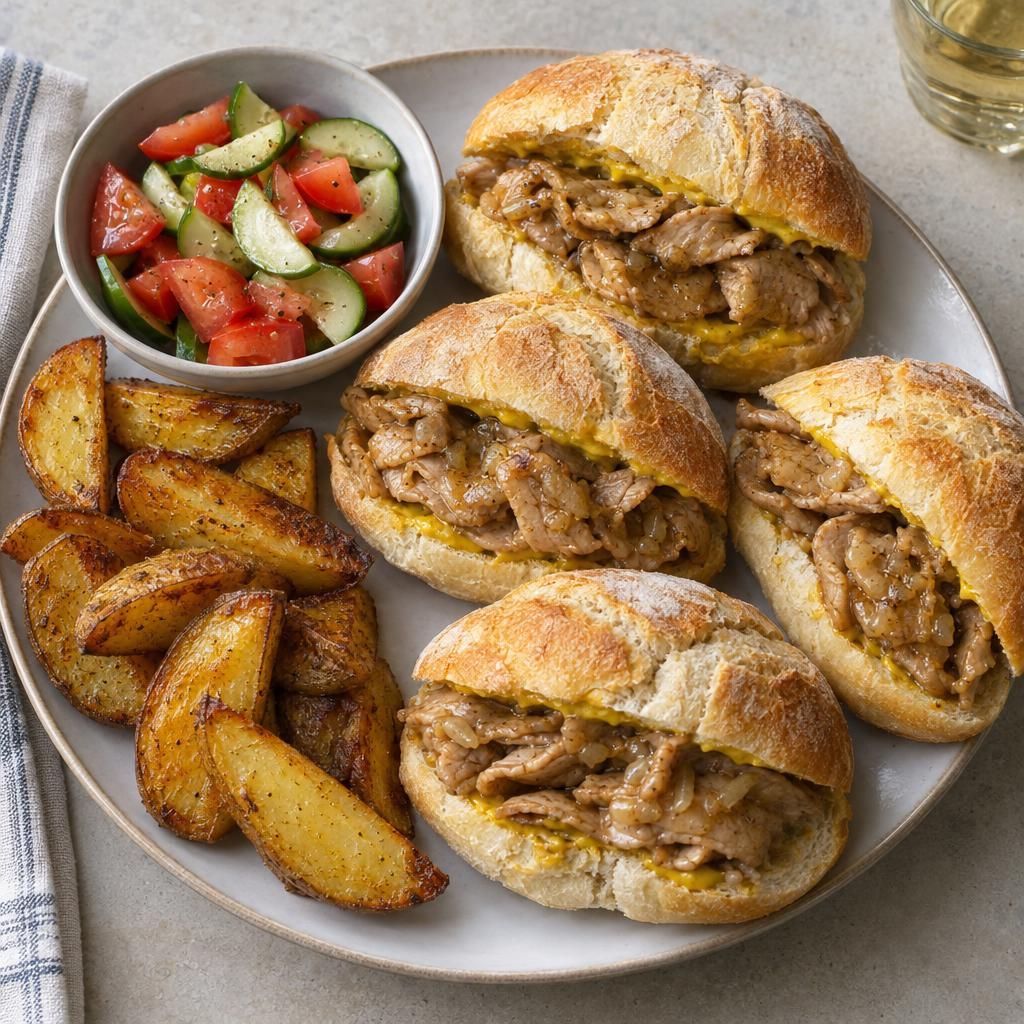
Thin slices of pork loin simmer gently in a garlicky white wine sauce, then fill crusty rolls with yellow mustard. Crisp roasted russet wedges and a fresh tomato-cucumber salad complete the meal.

Kroger

$17.23

Per Serving

$4.31

Prep

30 min

Cook

45 min

Difficulty

medium

Ingredients and shopping

Servings

$51.35

14 to buy · 2 you have

34% used in this recipe$34.12 unused

Steps

Centered freestanding kitchen oven photographed against a neutral light background.Oven
Centered nested set of four clear measuring cups with handles on a neutral light background.Measuring Cups
Centered studio photograph of a set of stainless steel measuring spoons on a pale neutral background.Measuring Spoons
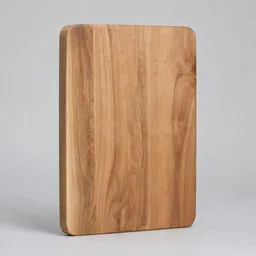
Centered rectangular wooden cutting board photographed against a plain light background.Cutting Board
A centered chef’s knife with a broad stainless-steel blade and dark handle photographed on a light neutral background.Chef’s knife
Centered set of three nested stainless-steel mixing bowls on a light neutral background.Mixing bowls
A single unbranded produce brush with a light handle and dense bristles, centered on a neutral light background.produce brush
A single stainless-steel slotted kitchen turner centered on a light neutral background.Metal turner
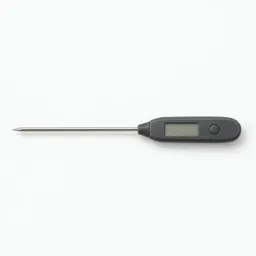
Centered thin-tip instant-read thermometer with a slender stainless-steel probe and compact unmarked handheld body on a neutral light background.Thin-tip instant-read thermometer
12-inch deep skillet
18-by-13-inch rimmed baking sheet
Clean platter
Clean tongs
Covered nonreactive marinating dish
1

Slice and marinate the pork

Centered nested set of four clear measuring cups with handles on a neutral light background.Measuring Cups
Centered studio photograph of a set of stainless steel measuring spoons on a pale neutral background.Measuring Spoons
Centered rectangular wooden cutting board photographed against a plain light background.Cutting Board
A centered chef’s knife with a broad stainless-steel blade and dark handle photographed on a light neutral background.Chef’s knife
Covered nonreactive marinating dish

Wash your hands with soap and water. Slice the pork across the grain into pieces approximately 1/4 inch thick. In the marinating dish, combine the wine, garlic, paprika, bay leaf, 3/4 teaspoon salt, and 1/4 teaspoon pepper. Add the pork and turn to coat. Cover and refrigerate for at least 30 minutes while preparing the sides. Wash your hands, knife, cutting board, and work surface thoroughly after handling the raw pork.

Keep the pork refrigerated while marinating and keep raw pork and its utensils separate from salad ingredients; wash hands and surfaces thoroughly after handling it.

2

Heat the oven and prepare the produce

Centered freestanding kitchen oven photographed against a neutral light background.Oven
Centered rectangular wooden cutting board photographed against a plain light background.Cutting Board
A centered chef’s knife with a broad stainless-steel blade and dark handle photographed on a light neutral background.Chef’s knife
A single unbranded produce brush with a light handle and dense bristles, centered on a neutral light background.produce brush

Heat the oven to 425°F with a rack in the middle. Scrub the potatoes and cucumber under running water, rinse the tomatoes, and dry all the produce. Cut away any damaged areas. Leave the potato skins on and cut the potatoes lengthwise into wedges approximately 3/4 inch thick at their widest point.

3

Season and roast the potato wedges

Centered freestanding kitchen oven photographed against a neutral light background.Oven
Centered studio photograph of a set of stainless steel measuring spoons on a pale neutral background.Measuring Spoons
A centered chef’s knife with a broad stainless-steel blade and dark handle photographed on a light neutral background.Chef’s knife
Centered set of three nested stainless-steel mixing bowls on a light neutral background.Mixing bowls
A single stainless-steel slotted kitchen turner centered on a light neutral background.Metal turner
18-by-13-inch rimmed baking sheet

Toss the wedges in a bowl with 2 tablespoons olive oil, 3/4 teaspoon salt, and 1/4 teaspoon pepper. Spread them on the baking sheet in a single layer with a cut side against the metal. Roast for 40–45 minutes, turning after 20 minutes, until well browned and tender when pierced with a knife.

4

Prepare the salad and dressing

Centered studio photograph of a set of stainless steel measuring spoons on a pale neutral background.Measuring Spoons
Centered rectangular wooden cutting board photographed against a plain light background.Cutting Board
A centered chef’s knife with a broad stainless-steel blade and dark handle photographed on a light neutral background.Chef’s knife
Centered set of three nested stainless-steel mixing bowls on a light neutral background.Mixing bowls

Meanwhile, cut the tomatoes into bite-size pieces. Halve the cucumber lengthwise and slice it into thin half-moons. Place both in a clean bowl and refrigerate until ready to dress. In a small bowl, stir together the white wine vinegar, remaining 2 tablespoons salad olive oil, 1/2 teaspoon salt, and 1/4 teaspoon pepper.

5

Start the marinade sauce

Centered studio photograph of a set of stainless steel measuring spoons on a pale neutral background.Measuring Spoons
12-inch deep skillet
Clean tongs
Covered nonreactive marinating dish

When the potatoes have approximately 15 minutes left to roast and the pork has marinated for at least 30 minutes, begin cooking the pork. Heat the remaining 1 tablespoon olive oil and the butter in the skillet over medium heat until the butter melts. Pour the marinade into the skillet, using tongs to hold the pork back in its dish. Include the garlic and bay leaf. Bring the liquid to a gentle simmer, then reduce the heat to medium-low.

Do not taste the used marinade as sauce before it has been brought to a full rolling boil.

6

Gently simmer the pork in batches

Centered thin-tip instant-read thermometer with a slender stainless-steel probe and compact unmarked handheld body on a neutral light background.Thin-tip instant-read thermometer
12-inch deep skillet
Clean platter
Clean tongs

Add half the pork to the skillet, separating the slices so the sauce can circulate around them. Cook at a gentle simmer, turning once, for approximately 3–5 minutes, until the pork reaches 145°F. Insert the thermometer sideways into the center of a thick slice to check. Transfer the cooked pork to a clean platter using clean tongs. Repeat with the remaining pork, maintaining a gentle simmer rather than a vigorous boil.

Check that the pork reaches 145°F with the thermometer inserted into a thick slice; clean the thermometer before and after use.

7

Boil the sauce and rest the pork

12-inch deep skillet
Clean platter

Once all the pork is out of the skillet, bring the sauce to a full rolling boil and boil for at least 1 minute before serving it. Remove the skillet from the heat and discard the bay leaf. Let each batch of pork rest for at least 3 minutes after cooking; keep the platter loosely covered with foil while finishing the meal.

After removing the pork, bring the sauce to a full rolling boil for at least 1 minute before serving.

Let each batch of pork rest for at least 3 minutes after cooking.

8

Warm the rolls

Centered freestanding kitchen oven photographed against a neutral light background.Oven
A centered chef’s knife with a broad stainless-steel blade and dark handle photographed on a light neutral background.Chef’s knife

Split the rolls horizontally, leaving one side attached. During the final 3 minutes of potato roasting, place the rolls directly on the oven rack, cut sides facing up, to warm and lightly crisp their interiors. Remove the rolls and wedges from the oven.

Use care when removing the hot rolls and wedges from the oven.

9

Dress the salad and assemble the sandwiches

Centered studio photograph of a set of stainless steel measuring spoons on a pale neutral background.Measuring Spoons
Centered set of three nested stainless-steel mixing bowls on a light neutral background.Mixing bowls

Toss the tomatoes and cucumber with all the prepared dressing. Spread 1 tablespoon yellow mustard inside each roll. Divide the pork equally among the four rolls, then spoon 1 tablespoon of the thoroughly boiled sauce over the meat in each sandwich. Keep the sauce mostly on the pork rather than soaking the bottom of the roll.

10

Serve the sandwiches and sides

Serve immediately with the hot potato wedges and tomato-cucumber salad. Serve any remaining boiled sauce separately for dipping rather than pouring it into the sandwiches.

11

How did it turn out?

Rating and review tools are unavailable right now.

Recipe facts

Cuisine
Portuguese-inspired

Make a bundle with Portuguese-Inspired Bifana Sandwiches

Add meals that share its groceries.