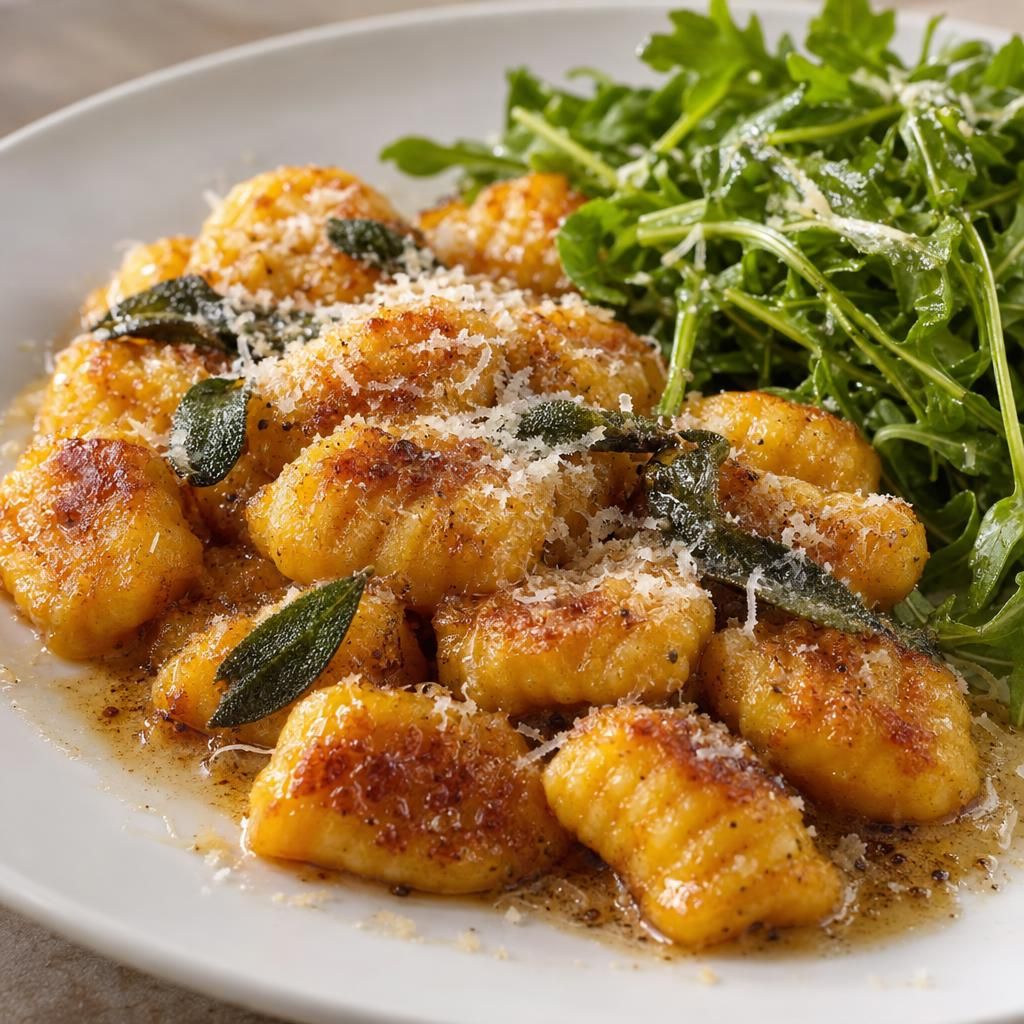
Butternut Squash Gnocchi with Sage Butter
Servings: 4 · Prep: 40 min · Cook: 80 min · Total: 135 min
Ingredients
- about 3 1/4 cups (1 pound) Butternut squash
- 1 1/4 pounds Russet potatoes
- 2 cups All-purpose flour
- 1 Large egg
- 1/2 cup Unsalted butter
- 2 tablespoons Fresh sage
- 3/4 cup Parmesan cheese
- about 7 cups (5 ounces) Baby arugula
- 1 tablespoon Fresh lemon juice
- 3 tablespoons Olive oil
- 1 tablespoon + 1 teaspoon Fine salt
- 1/2 teaspoon Ground black pepper
- 16 cups (4 quarts) Water
Equipment
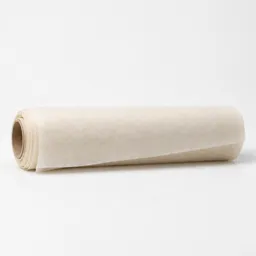
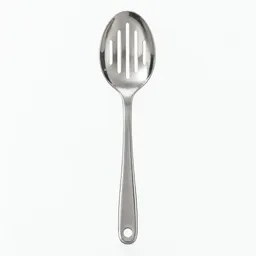
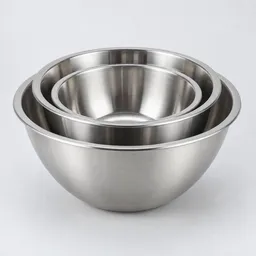
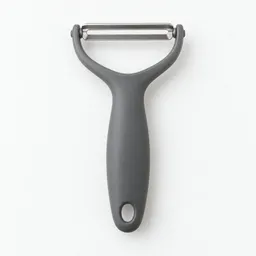
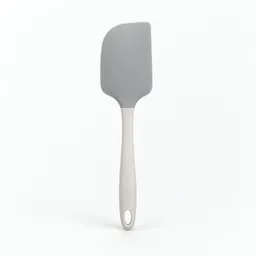
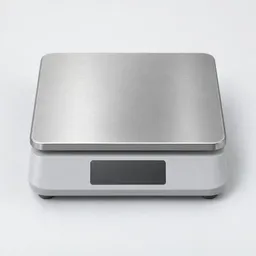
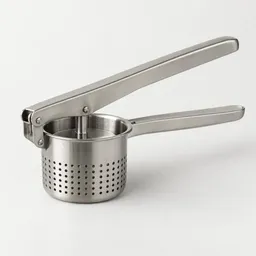
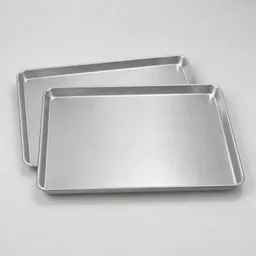
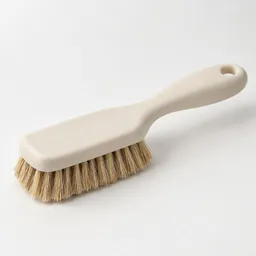
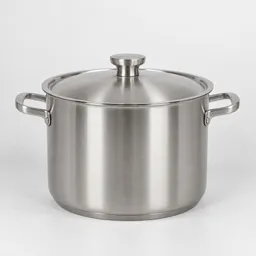
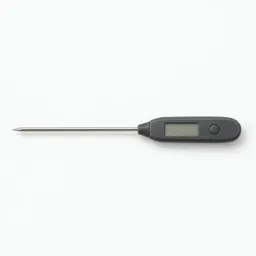
Whisk; Measuring Cups; Measuring Spoons; Cutting Board; Chef’s knife; Fork; Parchment paper; Slotted spoon; Mixing bowls; Vegetable peeler; Flexible spatula; Kitchen scale; Potato ricer; 2 rimmed baking sheets; produce brush; 6-quart pot; Thin-tip instant-read thermometer; 12-inch light-colored skillet; whisk; measuring cups; measuring spoons; cutting board; chef’s knife; fork; parchment paper; slotted spoon; mixing bowls; vegetable peeler; flexible spatula; kitchen scale; potato ricer; thin-tip instant-read thermometer
Steps
- Prepare the oven and produce. Heat the oven to 425°F. Wash your hands and clean the work surface. Before peeling or cutting, scrub the squash and potatoes under running water, remove damaged areas, and dry. Rinse and dry the sage and any arugula not labeled prewashed. Wash the lemon before cutting and juicing it.
- about 3 1/4 cups (1 pound) butternut squash — peeled, seeded, and cut into 3/4-inch cubes
- 1 1/4 pounds russet potato
- 2 tablespoons sage — thinly sliced
- about 7 cups (5 ounces) arugula
- 1 tablespoon lemon juice
- Roast the squash and potatoes. Line one baking sheet with parchment. Toss the squash with 1 tablespoon olive oil and spread it in a single layer. Prick the potatoes several times with a fork and place them on the second baking sheet. Roast both, turning the squash after 20 minutes. The squash should take 30–40 minutes and should be very tender, lightly browned, and dry on the surface. The potatoes should take 55–65 minutes; a knife should slide easily into their centers.
- about 3 1/4 cups (1 pound) butternut squash — peeled, seeded, and cut into 3/4-inch cubes
- 1 1/4 pounds russet potato
- 1 tablespoon olive oil
Use oven mitts when turning the squash or handling hot baking sheets.
- Mash and dry the vegetables. Mash the roasted squash thoroughly with a fork. If it looks watery or releases liquid around the edges, stir it in the skillet over medium-low heat for 3–5 minutes, until it forms a thick mound without watery seepage. Once the potatoes are cool enough to handle, split them, scoop out the flesh, and pass it through the potato ricer while still hot. Do not use a food processor.
Split hot potatoes carefully and direct escaping steam away from your hands and face.
- Measure and cool the vegetables. Weigh out 8 ounces (225 g) of mashed squash and 12 ounces (340 g) of riced potato for the dough. Reserve any extra cooked vegetables for another meal. Spread the measured vegetables in separate wide bowls and leave uncovered for about 15 minutes, until barely warm and no longer steaming. Let one baking sheet cool, then line it with clean parchment.
- Prepare the dressing and cooking water. Whisk the lemon juice with the remaining 2 tablespoons olive oil, 1/4 teaspoon salt, and 1/4 teaspoon pepper in the salad bowl. Keep the arugula separate and refrigerated until serving. Put the 4 quarts water and 3 teaspoons salt in the pot and begin bringing it to a boil.
- 1 tablespoon lemon juice
- 2 tablespoons olive oil
- 1 tablespoon + 1/2 teaspoon salt
- 1/4 teaspoon Ground Black Pepper
- 16 cups (4 quarts) Water
- about 7 cups (5 ounces) arugula
- Mix the dough gently. Gently combine the cooled squash and potato with the beaten egg, 3/4 teaspoon salt, and remaining 1/4 teaspoon pepper. Sprinkle over the initial 1 1/2 cups flour and fold with the spatula just until a dough forms. It should be soft and slightly tacky but hold its shape. Do not knead it smooth or keep adding flour simply to eliminate all stickiness.
- 1 egg — lightly beaten
- 3/4 teaspoon salt
- 1/4 teaspoon Ground Black Pepper
- 1 1/2 cups all-purpose flour
Do not taste uncooked dough; raw flour and egg must be thoroughly cooked, and clean dough-contact surfaces before handling the ready-to-eat salad.
- Test a serving-sized gnocchi. Reduce the boiling water to a gentle boil. Shape a test gnocchi about 3/4 inch thick and 1 inch long, matching the serving pieces, and lower it into the water. Once it floats, cook for another 1–2 minutes. Lift it out and check its center with the thin-tip thermometer, inserting the probe from the side. If it has not reached at least 160°F, return the intact piece to the water and continue simmering and rechecking, cleaning the thermometer between checks. Once it reaches that temperature, cut it open: it should be tender throughout without a raw, floury center. If the center is raw or floury, cook another same-sized test piece longer and recheck. Note the successful cooking time after floating as a guide for the serving batches. If the test gnocchi falls apart or is too soft to lift intact, gently fold 1 tablespoon of the reserved adjustment flour into the dough and test again. Use only as much of the reserved 1/4 cup as necessary.
- 1 tablespoon all-purpose flour
Lower the test gnocchi and thermometer carefully into the boiling water to avoid splashes.
- Shape the gnocchi. Use the measured dusting flour sparingly on the work surface, your hands, and the prepared baking sheet. Divide the dough into four pieces. Gently roll each into a rope about 3/4 inch thick, then cut into 1-inch pieces. Place the gnocchi on the sheet without stacking them. Avoid repeated rolling or pressing; the pieces do not need to look perfectly uniform. Wash your hands and clean dough-covered surfaces before handling the salad.
- 1/4 cup all-purpose flour
Wash hands and clean dough-covered utensils and surfaces before handling the ready-to-eat salad.
- Brown the butter with sage. If you used the skillet to dry the squash, wash and dry it. Melt the butter over medium heat, swirling frequently. After about 4–6 minutes, when the milk solids begin turning golden, add the sage. Cook for another 30–60 seconds, until the solids are hazelnut brown and the butter smells nutty. Immediately remove the skillet from the burner.
- 1/2 cup butter
- 2 tablespoons sage — thinly sliced
Add the sage carefully to the hot butter to minimize splashing.
- Cook and check each batch. Return the water to a gentle boil and cook the gnocchi in three batches. Stir once very gently to prevent sticking. After they float, cook for the additional time established by the test piece, usually 1–2 minutes, treating the test time as a guide rather than the sole endpoint. Lift out representative larger gnocchi from each batch and check their centers with the thin-tip thermometer, inserting the probe from the side. Continue simmering and rechecking until the centers reach at least 160°F; cut a checked piece open to confirm there is no raw, floury center. If needed, keep simmering the batch and check another piece. Clean the thermometer between checks. Lift the cooked gnocchi out with the slotted spoon, let excess water drain briefly, and gently lower them into the browned butter off the heat. Do not rinse them.
Handle the boiling water and hot gnocchi carefully; keep the browned-butter skillet off the heat while transferring gnocchi to reduce splattering.
- Dress the salad and reserve cooking water. During the final batch, toss the arugula with the prepared dressing and divide it among four plates. Before draining the last gnocchi, reserve 1/4 cup of the cooking water.
- about 7 cups (5 ounces) arugula
- Coat the gnocchi and serve. Place the skillet over low heat and add 2 tablespoons of the reserved cooking water. Gently fold and turn the gnocchi for 1–2 minutes, until hot and coated. Remove from the heat and add the 3/4 cup Parmesan in two additions, folding carefully. If the coating seems dry, add the remaining 2 tablespoons reserved cooking water. Divide all the gnocchi and sauce among the four plates and serve immediately with the salad.
- 3/4 cup parmesan cheese — finely grated
Notes
Serving yield: 4 main-course servings, each with one-quarter of the gnocchi, sauce, and salad.
The cooked vegetable weights are important: differences in roasting moisture and potato size can otherwise lead to excessive flour. Thorough drying and gentle handling produce lighter gnocchi.
For make-ahead preparation, freeze the shaped, uncooked gnocchi on the prepared baking sheet until firm, then transfer to an airtight freezer container. Freeze for up to 1 month for best texture. Boil directly from frozen, allowing additional cooking time and checking representative larger gnocchi from each batch to confirm that their centers reach at least 160°F and have no raw, floury center. Prepare the butter sauce and salad just before serving.
Cooking safety
Do not taste uncooked dough; raw flour and egg must be thoroughly cooked. Wash hands, utensils, and surfaces that contact the dough before using them for the ready-to-eat salad.
Open the baked potatoes carefully to release hot steam. Keep the browned-butter skillet off the heat while transferring the drained gnocchi to reduce splattering.
Refrigerate leftovers in shallow, covered containers within 2 hours, within 1 hour when the surrounding temperature exceeds 90°F. Keep the refrigerator at 40°F or below, store the salad separately, and use the cooked gnocchi within 3 days.
https://plumtally.com/recipes/butternut-squash-gnocchi-with-sage-butter-rg1k1l05rjg6